

Why India Is Becoming the Next Global Hub for Electronics Manufacturing (And Why Most Startups Will Still Bleed Cash Here)
Everyone says India is the next global electronics manufacturing hub. They point to massive government PLI schemes, the China+1 exodus, and a booming domestic market.
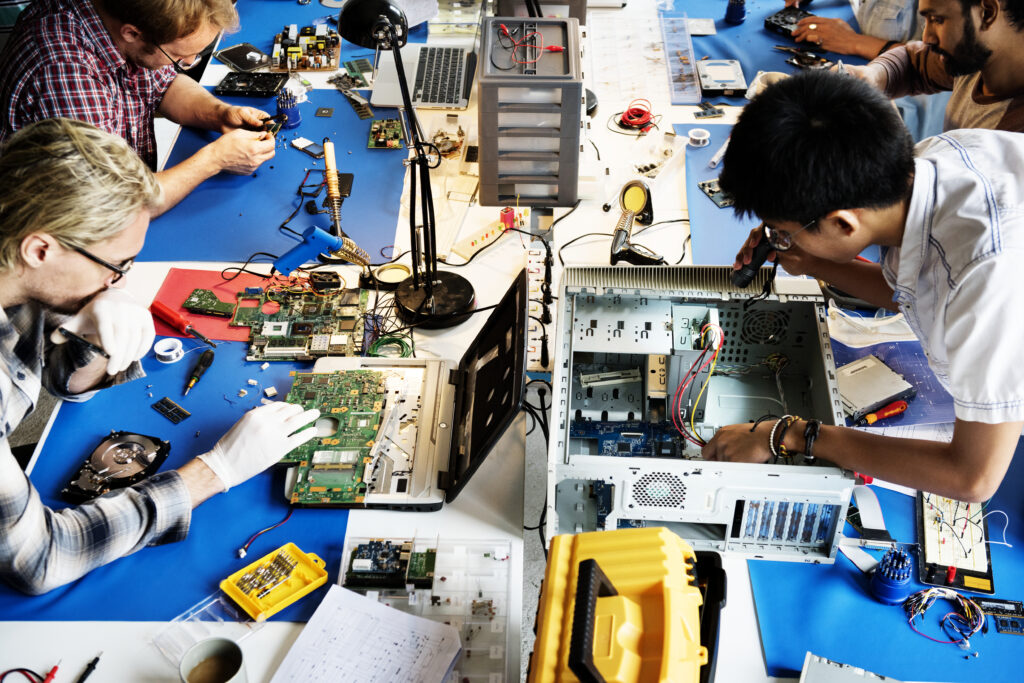
But as an operator running high-speed SMT lines, let me tell you the brutal truth: Moving your supply chain to Chennai or Pune won’t save your hardware startup if you are still treating your factory like a dumb assembly line.
The geography has changed, but the friction hasn’t. Here is why the Indian EMS ecosystem is broken, and what OEMs must do to actually survive the transition.
The Gap Between "Digital Dreams" and Shop-Floor Reality
The current manufacturing landscape in India is caught between two deeply flawed models.
On one side, you have legacy “job-work” EMS companies. They bought a ₹20 Crore SMT line and think that makes them a tech company. They don’t care about your unit economics; they just want your Gerber files so they can bill you for component placements.
On the other side, you have slick digital manufacturing platforms. They give you a beautiful online dashboard that promises a seamless, Amazon-like checkout for your PCBA. But when it comes to the gritty, industrial reality of building a complex EV motor controller, a dashboard cannot fix a thermal shadowing issue in a reflow oven.
The Ground Reality: Where Your Margins Actually Die in India
India has the infrastructure, but OEMs are still hemorrhaging cash because they are managing execution gaps instead of building products. Here is where the real cost leakages happen on the factory floor:
- The Sourcing Chokehold: India is a hub, but we still import heavy volumes of active components. If your EMS isn’t doing proactive BOM cost optimization and securing form-fit-function alternatives on Day 1, a single obsolete IC will halt your entire ₹50 Crore production run.
- The “Cheap Assembly” Trap: Founders cheer when they negotiate a rock-bottom assembly rate with a legacy vendor. Then they lose thousands of rupees when poor DFM (Design for Manufacturing) causes massive tombstoning on 0201 micro-capacitors, tanking their SMT line yields.
- The Manual Rework Nightmare: Legacy factories routinely skip 3D Solder Paste Inspection (SPI) to speed up lines. Catching a paste error early costs ₹5. Catching a cold solder joint after the reflow oven requires ₹500 of highly skilled manual rework—and destroys your product’s field reliability.
What True Manufacturing in 2026 Looks Like
India will only dominate the global supply chain when OEMs stop buying “machine time” and start buying “execution.”
To scale successfully here, you cannot afford to separate raw engineering from mass production. You need Turnkey PCBA where your partner takes absolute ownership of the procurement, the obsolescence headaches, and the final box-build.
You also need agile New Product Introduction (NPI). Do not jump straight from a lab prototype to a 10,000-unit run. Dial in the machine nozzles, test the thermal profiles, and catch the flaws before the stencils are even cut.
The Chipmates Execution Platform
At Chipmates, we built our factory floors to solve this exact disconnect. We know that true electronics manufacturing isn’t just about importing fast machines; it is about engineering the friction out of the entire hardware lifecycle.
We act as an IP-secure, fully transparent extension of your team. By combining rigorous NPI protocols, Joint-ODM capabilities, and world-class Turnkey execution, we catch the leakages before they ever hit the SMT line.
India is the future of hardware. But only if you build it right the first time.
Are you ready to stop bleeding cash on the shop floor? Reach out to the Chipmates engineering team today for a brutal, no-nonsense DFM and BOM audit.