
Engineering for 1,000V+: Thermal Management and IPC Class 3 Assembly Standards in Modern Clean-Tech Electronics
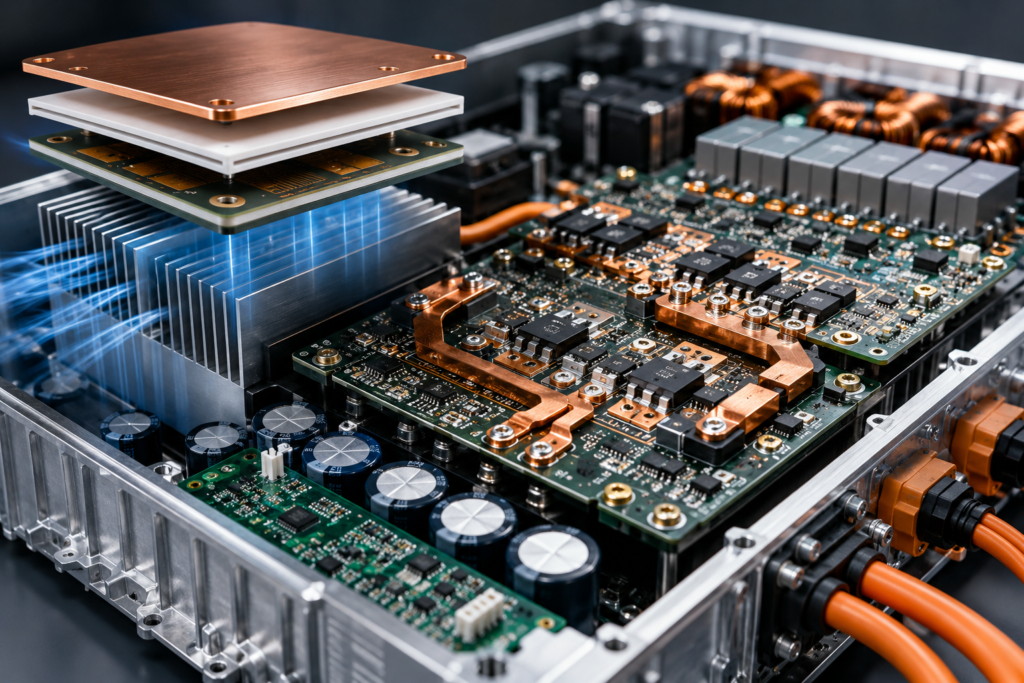
The push toward 800V+ EV powertrains, 1,500V solar central inverters, and utility-scale battery energy storage systems (BESS) is pushing power density to its physical limits. Designing for 1,000V DC and above is not simply an exercise in scaling up 400V topologies. Higher voltages drastically compress dielectric margins, generate severe thermal concentrations during fast switching cycles, and turn minor manufacturing anomalies into critical insulation failures. Achieving long-term field reliability under these conditions requires aligning high-voltage thermal design with IPC Class 3 manufacturing discipline. Thermal Management at High Voltage and Power Density Switching topologies using Silicon Carbide (SiC) and Gallium Nitride (GaN) drastically shrink magnetic components and enable high switching frequencies, but they concentrate thermal output in smaller surface areas. Managing this heat without compromising electrical insulation demands multi-layered thermal strategies: Dielectric Isolation: Creepage, Clearance, and CTI High-voltage layouts fail primarily through dielectric breakdown or electrical tracking across board surfaces. Design and manufacturing must rigorously address spacing and substrate behavior under electrical stress: IPC Class 3 Precision for Zero-Defect Assembly At 1,000V+, standard IPC Class 2 assembly is insufficient. Minor solder voids or misaligned components become high-stress electric field concentrators. IPC Class 3 standards ensure continuous operation in harsh clean-tech environments: Process Parameter IPC Class 2 Requirement IPC Class 3 High-Voltage Requirement Plated Through-Hole (PTH) Fill 50% vertical fill 75% minimum vertical fill for structural and electrical integrity Annular Ring Tolerance Breaks allowed up to 90° Zero breakout permitted; minimum 2 mil annular ring edge space Plating Thickness Standard copper wrap Heavy copper wrap plating to prevent micro-cracking under thermal cycling Inspection Standards Visual / 2D AOI sampling 3D SPI/AOI + 100% X-ray inspection for void detection beneath power devices Proper solder joint volume and voiding limits ($\le 10-15\%$ directly under thermal pads) are critical. Voids distort current flow, create hot spots, and degrade the assembly’s thermal impedance over time. At Chipmates, we bridge the gap between high-voltage power engineering and high-reliability EMS execution. From thermal DFM analysis and high-CTI substrate sourcing to IPC Class 3 SMT assembly and rigorous automated X-ray inspection, we build hardware meant to withstand extreme electrical and thermal stress. Planning your next 1,000V+ power conversion project? Contact Chipmates.in today to review your DFM requirements.
Manufacturing Data as a Strategic Asset
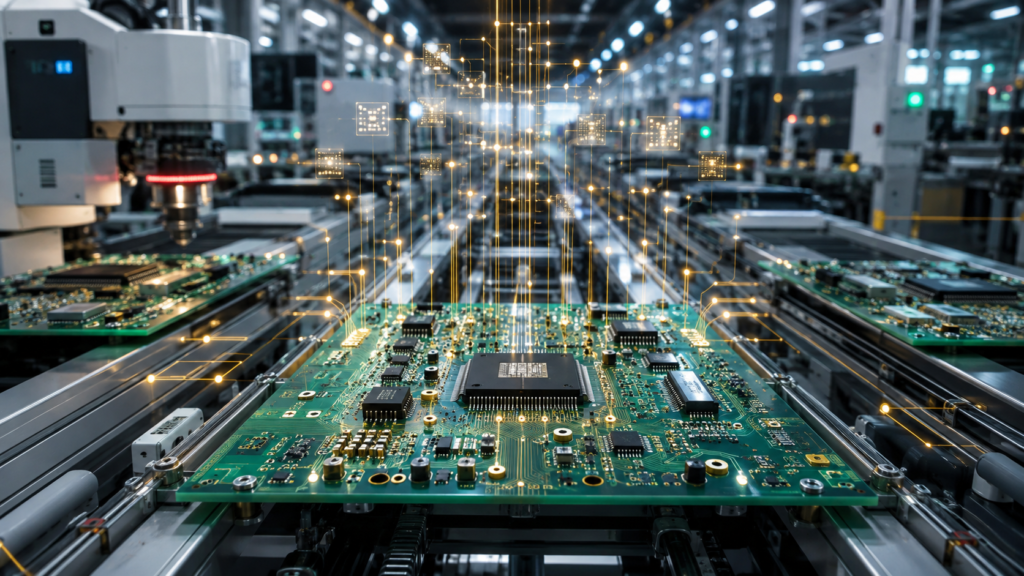
Every PCB leaving a modern factory carries more information than the finished board itself. It carries a history: which components were used, which production lot they came from, which firmware was loaded, how the board was tested, whether it was reworked and which engineering revision it followed. Yet manufacturing data is often treated as paperwork rather than an engineering asset. That needs to change. What Does Manufacturing Data Really Tell Us? Electronics manufacturing generates information at almost every stage of production. Serial numbers connect a finished product to its manufacturing history. Component and lot traceability show where critical parts came from. BOM and revision records establish exactly what version was built. Testing and inspection records add another layer, while firmware and programming records show what was actually loaded onto the product. Together, these records create something more valuable than a quality report: a digital production history for every product. From Traceability to Intelligence Traceability becomes strategically useful when it helps answer questions quickly. Consider an OEM facing repeated field failures. Without detailed manufacturing records, engineers may have to investigate failed units individually, looking for patterns after the fact. With production traceability, the investigation can go much further. Were the failures concentrated around a particular component lot? Did they begin after a BOM revision? Were affected units produced during a specific period? Was a particular firmware version involved? Did a supplier or process change coincide with the failures? The answers may already exist in the manufacturing data. This is where traceability moves beyond compliance. It becomes a tool for root-cause analysis, engineering decisions and risk management. Why Manufacturing Data Matters Beyond the Factory Manufacturing data should not remain isolated within the production team. It can support engineering change management, supplier evaluation, quality improvement and product lifecycle decisions. When manufacturing records are connected with field performance, warranty information and engineering revisions, companies gain a clearer view of how products behave beyond the factory. This is particularly important for EV electronics, Industrial IoT systems and defence products, where reliability and product continuity matter over an extended period. A production record can also become valuable months or years later when a component is changed, a firmware revision is introduced or a customer reports a field issue. Good data preserves context. The Foundation Is Discipline, Not Technology Building useful manufacturing intelligence does not begin with an expensive AI platform. It begins with disciplined processes: accurate serialisation, controlled revisions, reliable test records, clear component traceability, documented rework and protected production data. The value comes from making sure the information is accurate, consistent and connected. Without that foundation, more data simply creates more noise. The Chipmates Perspective At Chipmates, we see manufacturing data as part of the product lifecycle—not simply as a factory record. For high-reliability electronics, traceability, production-data integrity, revision control and test history should support the connection between design engineering, NPI, manufacturing and quality. The objective is straightforward: A PCB should leave the factory with more than a manufacturing pass. It should leave with a trustworthy production history. The factory should not only make the product. It should create the information needed to understand, trust and improve that product.